Southwest Leadership Addresses Adjunct Faculty Concerns at Convocation
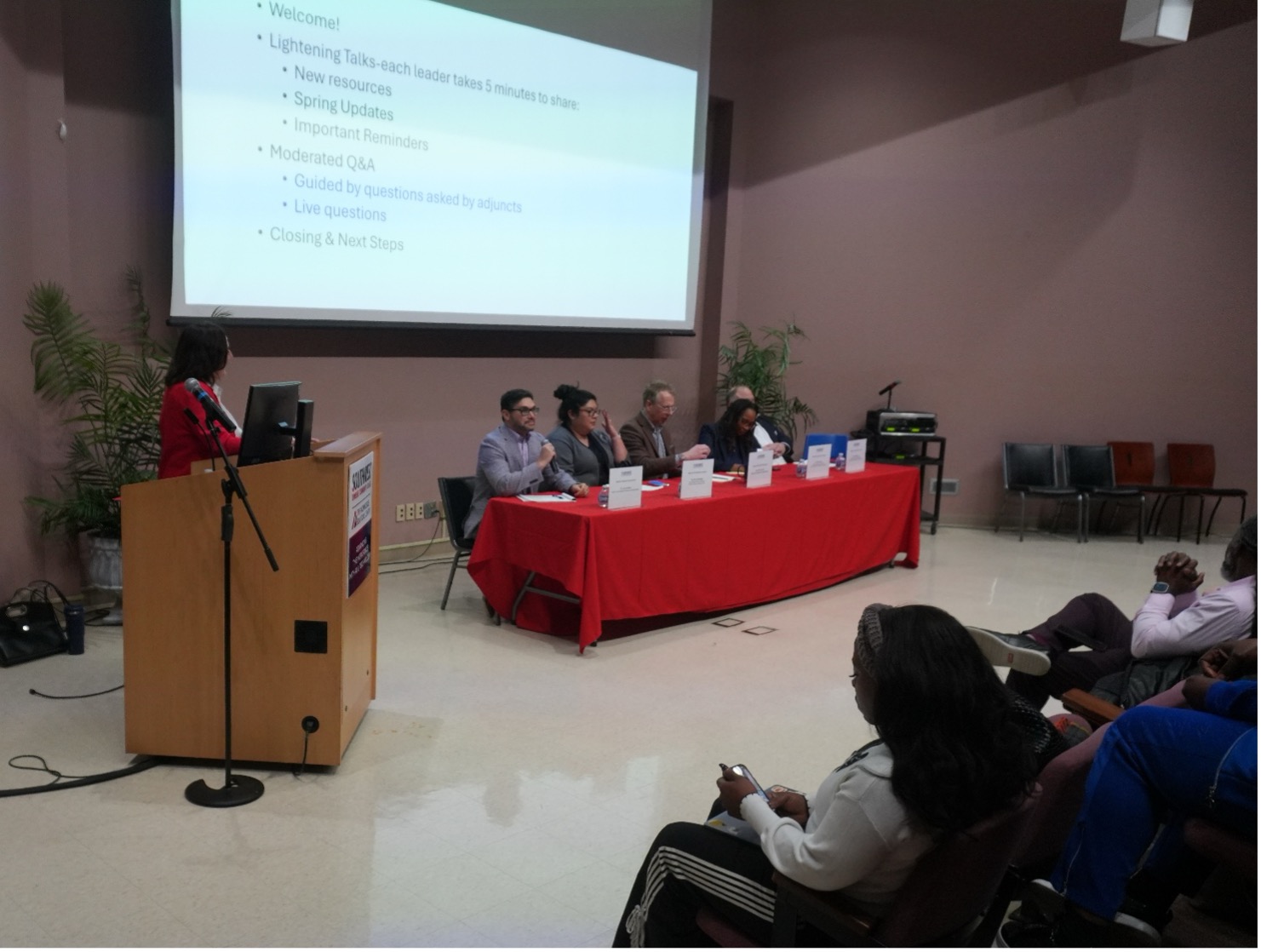
A panel of Southwest leaders answers questions and addresses concerns of the college’s
adjunct faculty.
Southwest leadership underscored the vital role of adjunct faculty and pledged improvements in communication, support, and professional development during an open forum Jan. 13 at the Macon Cove Campus.
The Questions and Answers session was part of the college’s ongoing engagement efforts with adjunct instructors seeking clarity on compensation, inclusion in decision-making, and resources for struggling students. Leaders framed the discussion within the context of “Reform 3.0: Pathways to Prosperity,” the institution’s five-year strategic plan aimed at boosting student success and institutional growth.
College officials opened the session by acknowledging the significant contribution adjunct faculty make to instruction. The data presented showed that while full-time faculty account for 44 percent of the teaching staff, adjuncts teach 56 percent of all classes. Success rates between the two groups remain nearly identical, with adjunct-led courses posting a 69 percent pass rate compared to 70 percent for full-time faculty.
“You all play an incredible, vital role,” said Interim Vice President for Academic and Student Affairs Jose da Silva. “Our students depend on evening and weekend classes, and those wouldn’t exist without adjunct faculty.”
Leaders also praised adjuncts for bringing real-world expertise into the classroom, noting that many work full time in their respective fields. “That experience is unmatched,” da Silva said. “It helps students connect theory to practice and prepares them for the workforce.”
Compensation and Workload Concerns
Compensation emerged as a key concern among faculty. Administrators explained that adjunct pay is set at the state level, limiting local flexibility. However, stipends are available for faculty who take on additional responsibilities such as course redesign or curriculum development. Officials also revealed that Human Resources is exploring a comprehensive compensation study to benchmark salaries against market data.
While pay adjustments may take time, leaders stressed the importance of professional development as a form of support. The college has secured funding for training opportunities through the Center for Teaching and Learning Excellence.
“Meaningful professional learning can help faculty adapt to changing student needs,” said Matthew Lexow, dean of academic support and operations. “We want to ensure you feel confident as expectations evolve.”
Improving Communication and Inclusion
Communication and inclusion were recurring themes throughout the discussion. Administrators acknowledged gaps and committed to improvements, including a new monthly “Monday Message” email from da Silva and continued listening sessions tied to organizational restructuring. To facilitate better communication, adjuncts suggested clearer email subject lines, step-by-step guides, and brief instructional videos to streamline processes.
Faculty also requested more classroom visits from support services and better promotion of tutoring resources. Leaders agreed, noting data that shows students who visit tutoring centers at least twice often earn a full letter grade higher. Officials encouraged instructors to incorporate tutoring requirements into assignments and reminded them of online options available to students with limited schedules.
To simplify referrals, adjuncts were urged to use the student success inbox at studentsuccess@southwest.tn.edu. Success coaches can connect students to academic and personal resources, from tutoring to housing assistance.
“If you remember no other resource, know your student success coach,” said Alma Rutledge, interim associate vice president for student success and experience. “They are the gatekeepers to so many opportunities.”
Resources for Struggling Students
Leaders highlighted existing structures, such as early alerts, which allow faculty to flag students at risk academically.
“Early alert is hands down one of the best methods to help a student succeed,” da Silva said.
Faculty were encouraged to submit alerts promptly and consider embedding requirements that expose students to tutoring and other support services.
Officials also discussed plans to expand embedded tutoring and provide more consistent instructional guides for faculty navigating new systems such as Banner 9.
“We know processes can be complex,” Lexow said. “We’re working on step-by-step guides and video tutorials to make it easier.”
Looking Ahead
As the college moves forward with Reform 3.0 and a comprehensive organizational review, leaders urged adjunct faculty to participate in upcoming listening sessions.
“Nothing is off the table,” da Silva said. “Your feedback will help shape a structure that supports all faculty and students.”
The forum closed with a reaffirmation of the college’s commitment to adjunct faculty.
“We can do a better job of making sure you feel informed and supported,” da Silva said. “Your feedback tonight helps us move in that direction.”